
 Access
 Login/Register
 Supplier Login












MYCOTOXINS (secondary metabolites produced by microfungi) can form in agricultural crops depending on factors like temperature, rainfall, moisture levels, and even in the storage and handling conditions of raw and finished food products. When ingested, mycotoxins could cause acute or chronic diseases, reduced growth and development, immunosuppression, and even death in humans and animals.
Besides the problem on mycotoxins, the use of pesticides is also a safety issue. More than 1,000 pesticides are used globally, many of these are said to be carcinogenic, cytotoxic, or eco-toxic. As a result, the demand for powerful and rapid analytical methods that can detect low concentrations of pesticides and mycotoxins has also increased.
SCIEX helps food safety laboratories and concerned groups detect very low levels of mycotoxins and pesticides present in food samples and to identify their quantity levels. In this interview, Philip Taylor, Global Marketing Manager, Food, Environmental and Forensic, SCIEX, and Vincent Lau, Market Development Manager, South East Asia, SCIEX, explain how solutions are applied.
Based on your experience, is it often that deadly mycotoxins and pesticides are discovered in samples analyzed by LC/MS/MS in produce/products from Asian suppliers?
Vincent Lau: The main LC-MS/MS adopters in Asia are government labs, commercial testing labs, and large food suppliers for routine pesticides and mycotoxin screening. To my knowledge, in ASEAN, the incidence of deadly mycotoxins and pesticides is not high, or relatively not as often as compared to veterinary drug residue found in food samples.
Mycotoxins and other naturally occurring toxins thrive in a tropical climate, in agricultural produce such as grains, wheat, oats, corn, vegetables and fruits. For agricultural economies in Asia, and the fact that Asia is both an importer and exporter of food products, taking the necessary action to control the risk of mycotoxins is very important.
Are there harmonized regulations on mycotoxins and pesticides in this region? Can you give us an idea of acceptable residue levels in Singapore?
Vincent Lau: Yes, there are harmonization efforts driven by multinational initiative known as ASEAN Economic Community to improve food safety implementation in the region. Singapore is the most mature country in ASEAN and references after EURLs. Pesticides lowest 10 ppb in vegetable/fruits and 5ppb in animal products.
Mycotoxins are often discovered in every stage of the food process. It seems safe to assume that the number of toxins automatically goes down as the product reaches the end stage. Although there’s always a chance of toxins being introduced at some point in the process.
Philip Taylor: I’m unable to comment on whether the concentration of the toxins automatically goes down as the product reaches the end stage, as manufacturers have their own processes, however, to export products then mycotoxin levels must be below the strict regulations adhered to by the importing country. There are always chances of toxins being introduced at some point in the process, storage of the product is critical as the climate is a massive contribution to the growth of mycotoxins. Mycotoxins are natural, generated toxins from certain strains of mold that can form on agricultural products. As a metabolite by-product of mold, the formation of mycotoxins is highly dependent on regional temperatures, rainfall, moisture levels, storage, and transportation conditions of raw and finished food products.
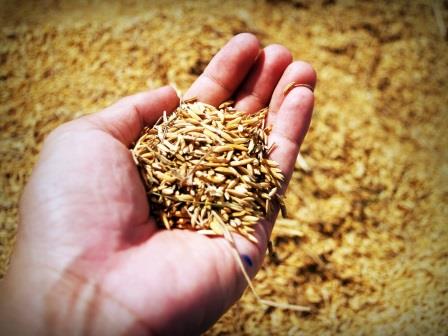
Agricultural produce can contain mycotoxins and pesticides detrimental to health. Products can undergo rapid testing and analysis to ensure they are safe for consumption
The LC-MS/MS method using the Scheduled Multiple Reaction Monitoring (Scheduled MRM™ algorithm) can identify 14 mycotoxins and 163 pesticides, according to a SCIEX case study. Are these toxic substances commonly found in most grains?
Philip Taylor: Traditionally, mycotoxins and pesticides require different sample preparation. A simplified extraction procedure was established to analyze the two compound classes simultaneously in one sample, without additional cleanup steps by SPE or immunoaffinity columns. This new simplified sample preparation in combination with high resolution LC, and sensitive MRM detection allows detecting pesticides and mycotoxins faster and less labor-intensive and time-saving. The abundance of mycotoxins and pesticides vary geographically, as mentioned earlier climate is a massive contributor to the growth of mycotoxins, and as a result certain geographies have a higher abundance of specific mycotoxins. Take Asia, for example the most prevalent mycotoxin there is Zearalenone (ZEN). ZEN is in a number of cereal crops, such as maize, barley, oats, wheat, rice, and sorghum. Whereas in South America the most abundant mycotoxin is Fumonisin and in Europe the most abundant mycotoxin detected is Vomitoxin also known as deoxynivalenol (DON). DON occurs predominantly in grains such as wheat, barley, oats, rye, and maize. DON is carcinogenic and as a result the U.S. Food and Drug Administration has established a level of 1 ppm (parts per million) restriction on its presence in food products. Using SCIEX LC-MS/MS solutions can quickly, accurately and confidently detect to this required level and a lot lower. Mycotoxin regulations extend into animal feed, the EU Regulation (EC) No 183/2005 of the European Parliament and of the Council (OJ L 35, 8.2.2005) lists the maximum concentration levels for mycotoxins in animal feed. For example, Deoxynivalenol for complementary and complete feeding stuffs for pigs has a maximum concentration level of 0.9ppm, Zearalenone has requirement for Complementary and complete feedingstuffs for calves, dairy cattle, sheep (including lamb) and goats (including kids) of 0.5ppm
What are the advantages of LC-MS/MS over other analytical methods?
Philip Taylor: LC-MS/MS is a preferred tool for the monitoring of mycotoxins because it is one of the only analytical techniques that allows a wide range of toxins to be analyzed in a wide range of crops and food types, with identification and quantitation in a single analysis.
Speed is one of the requirements in analysis. In the X500R QTOF, how fast can the analyzer provide results from steps 1-5?
Philip Taylor: In under 20 minutes you can accurately test for 288 mycotoxins and metabolites commonly tested in food products or environmental samples so you can more easily create methods and process targeted and non-targeted screening data on your complex samples.
Speed of analysis is critical to routine Mycotoxin analysis, therefore the X500R can deliver results in true work flows with not only the speed you require but with the accuracy to have the utmost confidence in the results that you report. The X500R delivers the rapid reporting of results thanks to the comprehensive software that accompanies the instrument, SCIEX OS. SCIEX OS can process the acquired data and compare it to our thorough Mycotoxin library where that data has been compiled using real samples and thus a true reflection of the Mycotoxin spectra in your matrix.
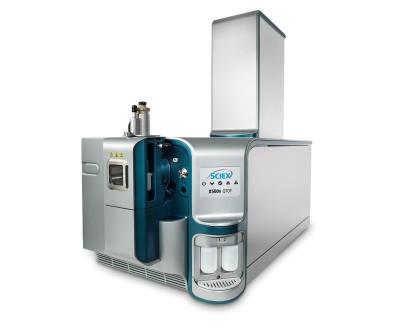
In less than 20 minutes, the X500R model from SCIEX can test for 288 mycotoxins and metabolites
How much sample/specimen should be provided to deliver accurate results? Does this vary per sample product?
Philip Taylor: The amount of specimen required varies. In one of the technical notes we produced, we did a very simplified sample preparation was used 10 similar to one that has been developed by SGS GmbH (Hamburg, Germany). Homogenized sample (2 g) was mixed with acetonitrile/water (8mL, 80/20) and roller mixed for 20 minutes. The sample was centrifuged for 10 minutes at 3500 rpm and filtered using a Phenomenex PHENEX filter (15 mm RC Membrane 0.45 μm). The filtrate was then diluted 1:4 with water containing 5 mM ammonium acetate prior to injection.
While food safety is non-negotiable, ensuring products are safe comes with a cost. How much should suppliers and manufacturers allocate for analysis?
Philip Taylor: LC-MS/MS is a cost effective solution to ensure the consistent monitoring, the return on investment of a SCIEX LC-MS/MS system for routine mycotoxin testing is relatively fast. The accuracy of the data is unrivalled and confidence in the results generated is very high, this increases even more when analysis is performed using a QTRAP® system due to the Enhanced Product Ion scan which delivers spectral information to cross-reference with a library standard. Using the QTOF approach delivers the utmost accuracy with the sensitivity required to perform the analysis, the X500R QTOF system is the perfect instrument for this type of analysis. Confidence in results is key, the cost of not performing regular and accurate analysis can have significant implications to a manufacturer.
Racing Archives