
 Access
 Login/Register
 Supplier Login












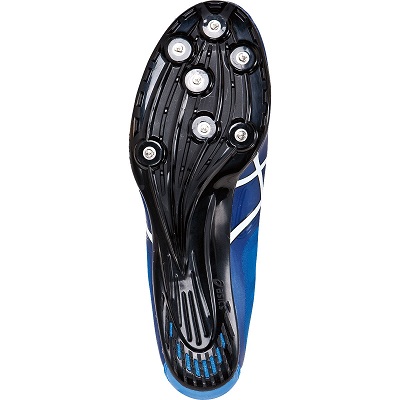
Can a human run 100 metres in 9.29 seconds? Or is 9.48 seconds the theoretical limit? Scientists can argue over that, yet the fastest men in the world are attempting to break Usain Bolt's world record of 9.58 seconds. Aside from their personal performance, the most important sports equipment they will have in this endeavor is their shoes. One such example is the Spike (Sonicsprint Elite) shoe from the ASICS Corporation of Kobe, Japan, which contains the DAIAMID® polyamide 12 elastomer from Daicel-Evonik in its sole.
Movement and speed are a challenge for material researchers and shoe developers. For this reason, they have worked closely together for years to transform the latest scientific findings into the ideal fit. For many of their new developments in sports-shoe soles, renowned sports manufacturers have long relied on VESTAMID polyamide 12 moulding compounds from Evonik Industries, Essen, as well as on DAIAMID by the joint venture Daicel-Evonik, which are ultra-light because of their low density of nearly 1g/cm³.
Energy recovery
Low weight is particularly important in a sports shoe for optimal support of the complex interplay of muscles, bones and ligaments in the foot. In addition, the properties of the sole have to ensure that the transmitted energy is returned as completely as possible to the support by a spring effect. Klaus Hülsmann, Key Account Manager at Evonik for the Sports segment, is convinced that: “When it comes to developing new polymers for the sports sector, it’s crucial to meet the needs of a fast-changing market. This is why we and our partners develop polyamides and plastics systems specifically targeted to each discipline."
VESTAMID and DAIAMID grades from polyamide 12 family are firm yet flexible enough that they release much of the energy absorbed when they are deformed back to the runner as an impulse. Because of the excellent mechanical stability of the materials, the shoes can be designed with features that save even more weight, such as soles that do not cover the entire surface or—as in the soles of the ASICS sprint shoe—a superior reinforcing technique. “The combination of rigidity and flexibility this creates gives the shoe the explosiveness a sprinter needs at the starting block”, explains Hiroaki Arita, senior researcher and group leader of Technical Center of Daicel-Evonik.
VESTAMID and DAIAMID can be dyed in a variety of brilliant colours. With the proper equipment, they can be laser-welded and laser-marked. They are used in a range of footwear, from ski boots to running shoes and football shoes, and can safely include metal inserts for clip connections for such features as cleats.
Growing use of rubber nubs
Daicel-Evonik is responsible for another development: the R-COMPO® sole is a composite of polyamide 12 and rubber nubs, and has an optimized ratio between excellent grip and low abrasion. The patented plastic-rubber composite technology played a key role in its development. This process involves bonding plastic to rubber so strongly without any additional adhesion promoters that any attempt to destroy the bond is more likely to rip the plastic than the actual binding site. New Balance, Japan, is already using it in several of its running-shoe models.
Evonik supports its customers not only with material development but also in design development using CAD and form-fill simulations. In material development, the company also increasingly relies on the bio-based moulding compounds VESTAMID Terra, which has a smaller CO2 footprint than petroleum-based polyamides. Just like conventional moulding compounds, their properties can be tailored to future sole developments, whether hard or soft.
Beyond the limits
Trexel’s MuCell technology also helped New Balance achieve greater performance by incorporating the technology in the development of the running shoe components. The current moulding programme for mid sole and heel components is incorporated into the production of over 1+ million pairs of running shoes a year. The running shoe designs utilise 3 different forefront parts – in 23 sizes along with 2 heel parts in 6 different sizes, all moulded with MuCell.
New Balance has incorporated the MuCell processing technology into its manufacturing process for over 4 years now. It has allowed the company to customise its designs to offer premium cushioning with a reduced amount of material. It found the durability of these components exceeding standard foam running shoe applications – offering a longer wearing shoe with more rebound and energy return for customers.
For years, Trexel has worked with the automotive industry leaders to develop numerous shock absorbing and material lightweighting applications. In the process, it realised that the same technology can also be applied for athletic shoes that require the same benefits of cushioning, weight and material reduction,, explained Steve Braig, President and CEO of Trexel, Inc.
The MuCell Microcellular Foam technology from Trexel Inc. is a complete process and equipment technology that enables the production of high quality plastic parts with significantly enhanced dimensional stability, lower weight/material and reduced cycle time. MuCell technology involves the introduction of precisely metered quantities of atmospheric gases (nitrogen or carbon dioxide) in the plasticising unit of an injection moulding machine to create a microcellular material structure in the end product. The creation of these microcellular structures brings a wide array of benefits including an increased part quality along with reduced production costs.