
 Access
 Login/Register
 Supplier Login












As China embarks on the first year of its “15th Five-Year Plan,” a dynamic blueprint for innovation and high-quality development in the plastics and rubber industries is set to unfold at CHINAPLAS 2026. “The Recommendations of the 15th Five-Year Plan” emphasizes cultivating emerging and future industries, expanding high-level openness, and advancing intelligent, green, and integrated development. These priorities provide fertile ground for the plastics and rubber industries and anchor the exhibition’s strategic focus.
Spanning over 390,000 sqm, CHINAPLAS 2026 will serve as a “Living Laboratory” of policy implementation and industry transformation. Under the theme “Transformation · Collaboration · Sustainability”, the exhibition will take place from April 21 to 24, 2026 at the National Exhibition and Convention Center (NECC), Hongqiao, Shanghai, PR China, empowering the industry to capitalize on new opportunities amid times of change.
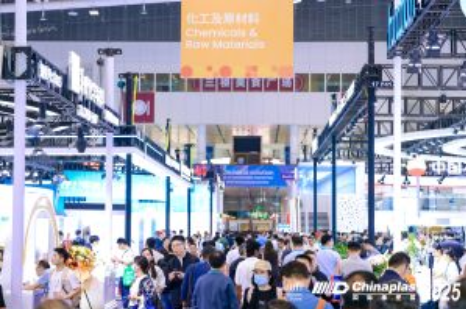
Emerging industries drive new growth frontiers
“The Recommendations of the 15th Five-Year Plan” highlights strategic clusters in new energy, advanced materials, aerospace, and low-altitude economy, alongside breakthroughs in quantum technology, biomanufacturing, hydrogen energy, fusion energy, brain-computer interfaces, embodied intelligence, and 6G communications. These emerging fields are rapidly expanding the application boundaries of plastics and rubber, unlocking new growth frontiers for this fundamental pillar of manufacturing.
In 2025, China produced 16.6 million and sold 16.5 million New Energy Vehicles (NEVs), maintaining global leadership for 11 consecutive years with year‑on‑year growth of 29% in production and 28.2% in sales. New generations of material solutions for batteries, charging infrastructure, and drive systems are emerging. Rianlon’s advanced polymer antioxidants effectively extend the service life of battery systems and charging equipment under extreme conditions. DOMO’s high‑purity engineering plastics, TECHNYL® PURE, with outstanding electrical insulation and chemical resistance, are well suited for high‑voltage environments.
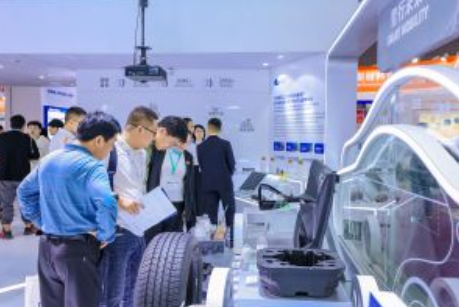
In 2026, the low‑altitude economy (LAE) is entering a triple boom of policy, technology, and market demand. With logistics, tourism, and emergency rescue driving demand, plastics and composites are becoming strategically vital for this trillion-RMB market. Covestro’s high‑CTI polycarbonate (PC) delivers reliable performance and safety in harsh electrical environments, ensuring stable operations of electric Vertical Take‑off and Landing (eVTOL) aircraft. Kingfa’s KingPan® flame retardant composite panels, with high glass‑fiber content and V‑0 flame retardancy, can withstand 1,200°C fire exposure for 30 minutes without dripping, and self‑extinguish within 10 seconds of flame removal, making them suitable for critical eVTOL components.
Commercial aerospace is experiencing explosive growth, creating enormous demand for materials and equipment. By December 2025, China submitted plans to the International Telecommunication Union (ITU) for the deployment of more than 200,000 satellites, marking a substantial acceleration in the construction of China’s low‑orbit satellite internet.
Carbon‑fiber reinforced nylon composites with lightweight and high strength properties have become an innovative choice for satellite brackets. PEEK and PEKK offer outstanding high‑temperature, radiation, and chemical resistance, making them suitable for satellite structural components, cable insulation layers, and engine seals. Phenolic resins, with high char yield and excellent processability, are used in commercial solid rocket nozzles. Liquid Crystal Polymers (LCP), with low dielectric constant, low dielectric loss, and excellent high‑temperature performance, have become key materials for high‑frequency satellite communication components.
Syensqo's lightweight composite materials can replace metals in aerospace structures. Its prepreg and MTM46 epoxy resin system developed for extreme environments, such as space missions, this material delivers stiffness, impact resistance and thermal performance that surpasses metal alternatives. Payload fairings produced with this material can be around 30% lighter than metal equivalents, enabling lower fuel consumption, higher payload capacity and reduced manufacturing cost.
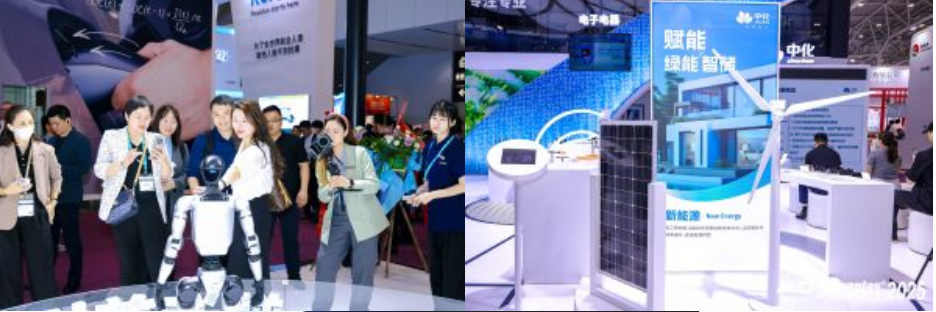
2025 marked the first year of mass production for humanoid robots, and 2026 is a critical turning point toward scaled deployment and accelerated commercialization. Humanoid robots are rapidly evolving from “performing on stage” and “competing in arenas” to “serving in households” and “working in factories.”
IDC forecasts that in 2025, China’s spending on embodied intelligent robots exceeded USD 1.4 billion, with a projected compound annual growth rate (CAGR) of 94% over the next five years. In this blue ocean market, breakthroughs in material technologies are the core enabler of scaled adoption, with plastics and rubber playing an indispensable role.
Specialty engineering plastics such as PEEK and PPS, with high strength, low density, wear resistance, and self‑lubricating properties, are increasingly replacing metals in robot joints, gears, and bearings. TPEs are used in flexible components such as artificial muscles and artificial skin. Lushan New Materials has launched a new generation of bimodal electronic skin products, capable of precisely detecting subtle forces such as light touches and pulses. Dawn Group has developed ultra‑soft artificial muscle TPEs with a Shore hardness of 0A, offering exceptional softness, elasticity, and a dry, non‑sticky surface feel, making them suitable for core components such as robotic joint actuators.
CHINAPLAS 2026 will gather more than 4,600 leading global exhibitors, actively responding to market demand while showcasing cutting‑edge technologies, diverse application scenarios and strong industry vitality. The exhibition will serve as an efficient bridge connecting traditional industry upgrades, emerging industry expansion, and future industry development.
As a hub for face‑to‑face technical exchange and business matchmaking, CHINAPLAS effectively breaks information barriers, builds industry consensus, and strengthens collaborative innovation. It provides Chinese enterprises with channels to connect with overseas markets and adapt to regional needs, while offering foreign companies a window into China’s manufacturing strength and innovation capabilities. With decades of accumulated influence, CHINAPLAS has become the global meeting place for the plastics and rubber industries, continuously attracting exhibitors and buyers worldwide.
For more information about CHINAPLAS 2026, visit: www.chinaplasonline.com
At CHINAPLAS 2026, Ringier Trade Media Ltd is located at booth 2.2K68(Hall 2.2,near Gate 5 )